

 Inquire (
 HOME
HOMEHotel Mattress Requirements: Durability, Fire Safety & Comfort
 Sep 07,2026

 Cloud Point
1. Why Hotel Mattress Requirements Are Different from Residential Standards
For B2B buyers in the hospitality industry, selecting a mattress is not simply about choosing a comfortable sleeping surface. A hotel mattress must meet a much higher standard than a residential product because it is used continuously by different guests, cleaned frequently, transported during room changes, and expected to maintain consistent performance over thousands of guest nights.
For hotel owners, operators, procurement teams, developers, and hospitality project suppliers, the mattress is one of the most important room assets. It directly affects guest satisfaction, online reviews, housekeeping efficiency, replacement costs, and brand reputation. A strong hotel mattress should balance three core requirements: durability, fire safety, and comfort. If any one of these areas is weak, the product may create operational problems, compliance risks, or guest complaints.
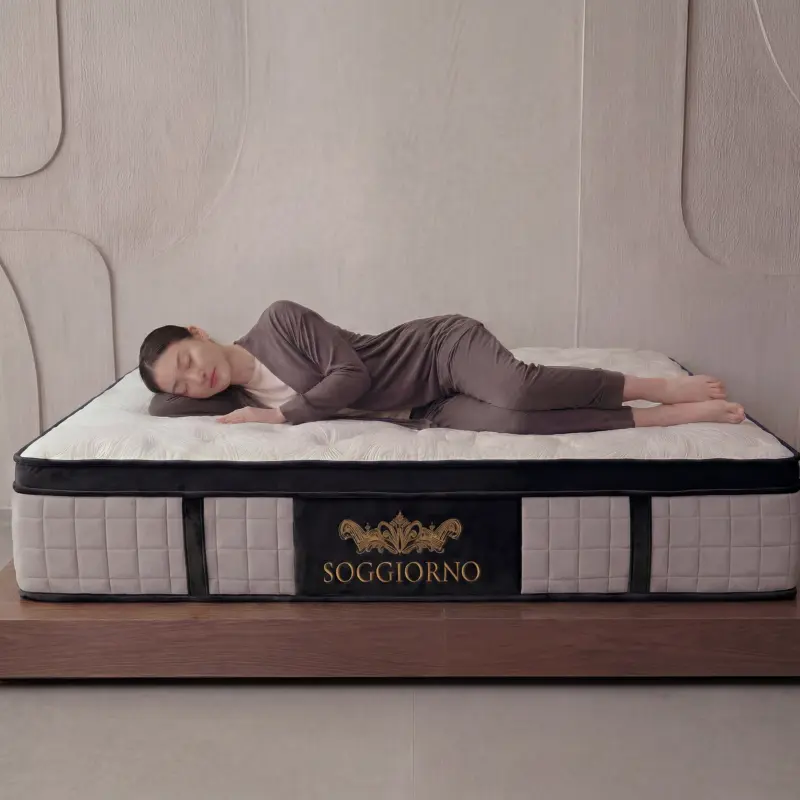
2. Durability: The Foundation of Commercial Hotel Mattress Performance
Durability is the first requirement for any hotel mattress . In a commercial environment, a mattress is used far more intensively than in a home. Guests change daily, rooms are turned over quickly, housekeeping staff handle the product regularly, and the mattress must remain supportive, stable, and visually acceptable over time.
A durable hotel mattress should resist common commercial challenges such as:
Edge collapse caused by frequent sitting and movement
Surface sagging after repeated guest use
Foam softening due to continuous compression
Spring fatigue in hybrid or innerspring models
Cover wear from cleaning, friction, and handling
Loss of height or firmness over the expected replacement cycle
For B2B buyers, durability is not only a product feature. It is a financial consideration. A pocket spring mattress that loses support too quickly can increase replacement costs, create guest complaints, and damage the hotel’s reputation. For this reason, hotel buyers should evaluate foam density, spring quality, edge reinforcement, cover strength, stitching durability, and overall structural stability before placing bulk orders.
3. Comfort: The Guest Experience Behind Every Hotel Mattress
Comfort is the most visible part of a hotel mattress. Guests may not notice foam density, spring systems, or stitching details, but they immediately notice whether a bed feels supportive, balanced, and restful. For hotels, comfort is closely linked to guest reviews, repeat bookings, and brand positioning.
A hotel mattress should provide:
Balanced support for different body types and sleep positions
Pressure relief for shoulders, hips, and lower back
Motion isolation for couples and shared rooms
Stable edge support for safety and ease of use
Breathable comfort layers for better airflow
A premium feel that matches the hotel’s positioning
Comfort should also be consistent across rooms. In a hotel project, guests expect the same sleep experience whether they stay in a standard room, a deluxe room, or a suite. For B2B buyers, this means comfort must be controlled through standardized specifications, not left to random variation during production.
A professional mattress factory should help hotel buyers define the right firmness level, comfort layer structure, and support core based on the target guest profile. A business hotel, resort, boutique hotel, extended-stay property, and luxury hotel may each require a different mattress configuration.

4. Fire Safety: A Critical Compliance Requirement for Hotel Buyers
Fire safety is one of the most important compliance requirements for hotel mattress purchasing. Hotels are high-occupancy commercial spaces, and bedroom furniture must meet strict safety expectations. For B2B buyers, fire safety is not optional. It is a basic requirement that affects product approval, project delivery, insurance considerations, and market compliance.
A hotel mattress may need to meet fire safety requirements related to:
Ignition resistance
Flame spread control
Smoke development
Fire-resistant barrier materials
Compliance with destination market regulations
Proper labeling and certification documentation
The exact fire safety standard depends on the country, region, hotel brand requirement, and project specification. Some markets require specific mattress fire tests, while others focus on furniture and bedding fire performance in commercial interiors. For international hotel projects, buyers should confirm the required fire safety standard before mass production begins.
A reliable mattress factory should help B2B buyers choose the right fire-resistant barrier, cover fabric, and internal materials without compromising comfort. Fire safety should be built into the mattress structure, not treated as an afterthought.
5. Hygiene, Maintenance, and Long-Term Room Performance
Beyond durability, fire safety, and comfort, hotel buyers should also consider hygiene and maintenance. A hotel mattress must remain clean, fresh, and easy to protect throughout its service life. Housekeeping teams need products that are easy to inspect, clean, and maintain, while hotel operators need solutions that reduce odor, moisture buildup, and surface contamination risks.
Important hygiene-related features include:
Breathable cover fabric
Moisture-resistant protection
Anti-bacterial or hypoallergenic treatment
Removable or replaceable protective layers
Easy-to-clean surfaces
Strong packaging and handling protection
For hotels in humid or tropical climates, breathability and moisture control become especially important. A mattress that traps moisture may develop odor, reduce guest comfort, or create maintenance challenges. For B2B buyers, hygiene performance should be considered together with durability and comfort, because all three affect long-term room quality.
6. Choosing the Right Mattress Specifications for Different Hotel Types
Not every hotel needs the same mattress. The right specification depends on the property type, guest profile, room category, replacement cycle, and brand standard. A luxury hotel may prioritize premium comfort, refined appearance, and stronger brand identity. A business hotel may focus on consistent support, durability, and cost efficiency. A resort may need better breathability and cooling comfort. An extended-stay hotel may require stronger long-term support for frequent or long-term guests.
For B2B buyers, the best approach is to match the mattress specification with the hotel’s operational reality. Key decisions include:
Mattress height and thickness
Firmness level
Foam, spring, or hybrid construction
Cover fabric type
Fire safety requirement
Edge support strength
Packaging and labeling
OEM or private-label branding
A flexible mattress factory can help hotel buyers adjust these details while maintaining consistent quality across large orders. This is especially important for hotel chains that want the same sleep experience across multiple properties.
7. OEM, ODM, and Bulk Hotel Mattress Sourcing
For large hotel projects, B2B buyers often need more than a standard product. They may require OEM or ODM services to create a mattress that matches their brand standard, room design, guest expectation, and compliance requirement.
OEM and ODM services allow buyers to customize:
Size and dimensions
Comfort layers and support core
Cover fabric and quilting design
Fire safety materials
Law labels and product tags
Packaging method
Shipping marks and branding details
For hotel chains and hospitality developers, this flexibility helps create a consistent product identity. For wholesale suppliers, it supports private-label development. For project contractors, it ensures that every mattress meets the same technical and comfort standard before delivery.
When sourcing a hotel mattress in bulk, buyers should request clear product specifications, material details, fire safety documentation, quality inspection records, and production samples. These steps help reduce the risk of inconsistency and ensure that the final product matches the project requirement.
8. Why B2B Buyers Should Work with a Professional Hotel Mattress Factory
A professional mattress factory should understand more than manufacturing. It should also understand hotel operations, guest expectations, commercial durability, fire safety compliance, bulk production, packaging efficiency, and project delivery.
For B2B buyers, the right factory partner helps reduce procurement risk by providing:
Consistent mattress quality across large orders
Clear product specifications
Reliable production scheduling
Strong quality control
Flexible OEM/ODM customization
Proper fire safety material options
Efficient packaging and shipping coordination
A hotel mattress is a long-term investment. It affects guest comfort, room performance, housekeeping efficiency, and brand trust. Choosing the right product and the right factory partner is therefore one of the most important decisions in hospitality procurement.
9. Conclusion: Building a Hotel Mattress Strategy Around Durability, Fire Safety & Comfort
Hotel mattress requirements should never be treated as a simple comfort choice. For B2B buyers, the best hotel mattress must deliver durable commercial performance, meet fire safety requirements, and provide a comfortable guest experience. These three elements work together to support guest satisfaction, operational efficiency, compliance confidence, and long-term project value.
By working with a professional mattress factory, hotel owners, operators, developers, and procurement teams can source a mattress that meets commercial demands while protecting brand standards. A well-chosen hotel mattress is not only a room furnishing. It is a key part of the guest experience and a strategic asset for hospitality projects.
 Cheap Mattress vs Premium Mattress: Why B2B Buyers Should Invest in Quality
 You May Also Like






 Tel
Tel
 Email
Email
 Address
NO.9 industry rd, Gegao, Longjiang, Shunde, Foshan,China