

 Inquire (
 HOME
HOMEMattress Buying Mistakes to Avoid in 2026 (Save Your Money)
 Apr 20,2026

 Cloud Point
Introduction: The High Cost of a Bad Night's Sleep
Buying a new mattress is one of the most significant furniture investments you will make for your home. On average, you will spend about 8 hours a day on it. Over a lifespan of 7 to 10 years, that adds up to nearly 30,000 hours of sleep. Yet, despite this massive time commitment, many consumers rush the process, leading to regret, back pain, and wasted money.
The mattress market in 2026 is flooded with options: bed-in-a-box brands, luxury hybrids, traditional innersprings, and organic latex models. With so much noise, it is easy to get distracted by marketing gimmicks. You might fall for a "50% off" sale that isn't real, or buy a mattress that feels great in the showroom but terrible in your bedroom.
To help you navigate this complex market, we have compiled the 10 most common mattress buying mistakes. Avoiding these pitfalls will ensure you find the perfect sleep surface for your budget and body type.

Mistake #1: Ignoring Your Sleeping Position
One of the biggest errors shoppers make is choosing a spring mattress based on what looks good rather than how they sleep. Your preferred sleeping position dictates the firmness level you need.
- Side Sleepers: If you sleep on your side, your hips and shoulders exert the most pressure. A firm mattress will push back against these points, causing pain. You need a medium-soft to medium mattress that allows for contouring.
- Back Sleepers: You need a balance. A medium-firm mattress is usually best to support the natural curve of your lumbar spine without letting your hips sink too deep.
- Stomach Sleepers: This is the trickiest position. You generally need a firmer mattress to prevent your hips from sinking, which would hyperextend your lower back.
The Fix: Be honest about how you sleep. If you toss and turn, a medium-firm hybrid mattress is usually the safest bet.
Mistake #2: Falling for the "Firmness" Label
You walk into a store, lie down, and the salesperson says, "This is a 7 out of 10 on the firmness scale." But what does that actually mean?
Firmness is subjective. A "Medium" mattress from one brand might feel like a "Soft" mattress from another. There is no universal standard for firmness in the mattress industry. Furthermore, firmness is not the same as support. A mattress can be soft but still provide excellent support if the base layers are high-density.
The Fix: Ignore the numbers. Focus on how your spine feels. Does it feel aligned? Are your pressure points relieved?
Mistake #3: The "5-Minute" Store Test
We have all done it. You walk into a department store, lie down on a mattress for 30 seconds while fully clothed, and decide if you like it. This is a recipe for disaster.
It takes your body at least 10 to 15 minutes to fully relax and for the mattress materials (especially memory foam) to adjust to your body heat and weight. Lying down for a few seconds only tells you the initial feel, not the long-term support.
The Fix: If shopping in-store, wear loose clothing and ask to lie down for at least 15 minutes. If buying online, ensure the brand offers a "Sleep Trial" of at least 100 nights.
Mistake #4: Prioritizing Price Over Quality
It is tempting to grab the cheapest mattress on the rack, especially if you are on a tight budget. However, a cheap mattress often uses low-density foams and weak coils.
Low-density foam (under 1.5 lbs per cubic foot) will lose its shape quickly, leading to permanent body impressions (sagging) within a year or two. You might save $300 upfront, but if you have to replace the mattress in 3 years instead of 8, you are actually losing money.
The Fix: Look for quality indicators. For foam, look for densities of 1.8 lbs or higher. For springs, look for coil counts over 800 for a Queen size.
Mistake #5: Ignoring Motion Transfer (For Couples)
If you share your bed with a partner or a pet, motion isolation is critical. Nothing ruins a good night's sleep like being jostled awake when your partner rolls over.
Traditional innerspring mattresses are notorious for poor motion isolation because the coils are interconnected. If one coil moves, they all move. This "trampoline effect" can be a dealbreaker for light sleepers.
The Fix: Look for a mattress with pocketed coils (where each spring is wrapped individually) or an all-foam mattress. These designs absorb movement rather than transferring it across the surface.
Mistake #6: Overlooking Edge Support
Edge support is one of the most overlooked features when buying a mattress. It refers to how well the perimeter of the bed holds its shape under weight.
If you have a mattress with weak edges, you might feel like you are going to roll off when you sit on the side to put on your shoes. It also reduces the usable sleep surface. If you are a couple sharing a Queen or King mattress, weak edges mean you are effectively losing inches of sleeping space.
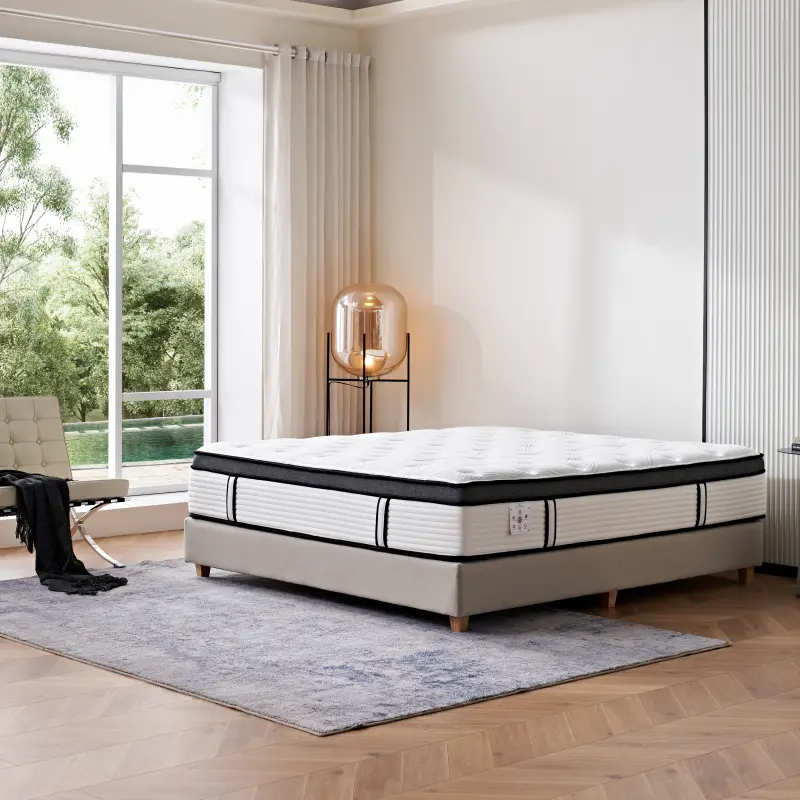
The Fix: Test the edges. Sit on the corner. Does it collapse? High-quality hybrid mattresses often have reinforced foam encasement around the border for maximum edge support.
Mistake #7: Buying the Wrong Size
"Don't size up," they say in fashion, but in mattresses, you should almost always size up if you have the space.
Couples often make the mistake of buying a Full (Double) size mattress to save space or money. A Full size is only 54 inches wide. That gives two people only 27 inches each—which is less than the width of a crib! This lack of space leads to disturbed sleep and relationship friction.
The Fix: For two adults, a Queen (60 inches) is the absolute minimum. A King (76 inches) is the gold standard for couples who want personal space.
Mistake #8: Misunderstanding "Cooling" Technology
Sleeping hot is a common complaint, especially with memory foam mattresses. Manufacturers know this, so they slap "Cooling Gel" labels on everything.
However, not all cooling technologies are created equal. Some are just marketing fluff. A mattress with a thin layer of gel-infused foam might cool you down for the first hour, but once the foam saturates with body heat, it will retain it.
The Fix: Look for breathable designs. Hybrid mattresses with airflow channels in the foam and breathable coil systems are generally cooler than solid foam blocks. Natural latex and wool covers are also excellent for temperature regulation.
Mistake #9: Neglecting the Foundation
You bought a brand new, expensive mattress, but you kept your old, rusty box spring. This is a critical error.
A mattress is only as good as what it sits on. If your foundation is sagging or uneven, your new mattress will conform to that shape, leading to premature wear and voiding your warranty. Furthermore, some modern foam mattresses require a solid, flat foundation or a slat spacing of less than 3 inches.
The Fix: Check the manufacturer's requirements. If your current bed frame is old or bowed, invest in a new foundation or a bunkie board to ensure your mattress lasts its full lifespan.
Mistake #10: Not Reading the Warranty Fine Print
Finally, many buyers assume a "10-Year Warranty" means the mattress is guaranteed to be perfect for a decade. This is rarely the case.
Most mattress warranties are "pro-rated," meaning you pay a percentage of the cost as the years go by. More importantly, they often have a "sag depth" clause. The manufacturer might only replace the mattress if it sags more than 1.5 inches. A dip of 1 inch can feel terrible but won't be covered.
The Fix: Read the warranty terms. Look for a non-prorated warranty and clear return policies during the sleep trial period.
Conclusion: Sleep Smart, Save Money
Choosing the right mattress doesn't have to be a gamble. By avoiding these 10 common mistakes, you can navigate the market with confidence. Remember, the best mattress isn't necessarily the most expensive one—it's the one that keeps your spine aligned and your sleep uninterrupted.
Take your time, do your research, and prioritize your health. Your body will thank you for it every morning.
 Chinese Latex Mattress Factory | 15 Years Export Experience & Full Supply Chain Control
 You May Also Like








 Tel
Tel
 Email
Email
 Address
NO.9 industry rd, Gegao, Longjiang, Shunde, Foshan,China