

 Inquire (

 HOME
Private Label Mattress Manufacturing: Branding, Labeling & Compliance for B2B Buyers
 Nov 07,2026

 Cloud Point
1. Why Private Label Mattress Manufacturing Matters for B2B Buyers
Private label mattress manufacturing allows distributors, hotel groups, retailers, and e-commerce brands to sell products under their own name without building a factory. For B2B buyers, this model offers stronger brand control, better margin potential, and more flexibility in product positioning. Instead of reselling generic models, buyers can define specifications that match their target market.
A professional mattress factory should support private label buyers from product development to final export documentation. The key is not only to add a logo, but to build a consistent product identity through design, materials, labeling, packaging, and compliance. When these elements are managed correctly, a private label mattress program can become a long-term asset rather than a one-time purchase.
2. Defining the Brand Positioning of Your Mattress Line
Before production begins, B2B buyers should clarify how the mattress brand will be positioned. A private label mattress can target budget buyers, mid-range retail customers, premium hospitality projects, or specialized e-commerce segments. Clear positioning helps determine materials, firmness, height, packaging, and price structure.
Important branding decisions include:
Target customer segment and price level
Core comfort type, such as memory foam, pocket spring, or hybrid
Firmness range suitable for the destination market
Packaging style, including roll pack, flat pack, or retail-ready carton
Brand story, such as cooling comfort, hotel-grade support, or eco-friendly materials
Product tier structure, from entry-level to premium models
A well-defined positioning makes it easier to choose the right memory foam mattress construction and avoid unnecessary cost. It also helps buyers communicate more clearly with the factory during sample development.

3. Customizing Mattress Design and Product Specifications
Private label mattress manufacturing is most valuable when product specifications are customized for the buyer’s market. A factory can adjust foam density, spring count, comfort layer thickness, cover fabric, edge support, and overall height based on the agreed sample standard.
For B2B buyers, specification control should be documented, not verbal. Each model should have a technical sheet that includes:
Pocket spring Mattress dimensions and tolerances
Foam density and firmness level
Spring type and coil configuration
Cover material and quilting design
Fire barrier or safety layer details
Packaging method and carton size
Label placement and branding requirements
This documentation becomes the reference for sample approval, mass production, and quality inspection. It also reduces misunderstandings between the buyer and the mattress manufacturer during export orders.
4. Mattress Labeling Requirements for Export Markets
Labeling is a critical part of private label mattress compliance. Different countries and regions have different rules for product labels, care instructions, material disclosure, and safety warnings. Incorrect labeling can cause customs delays, retail rejection, or legal risk.
Common labeling elements include:
Brand name and model identification
Size and dimensions
Material composition of comfort layers and cover
Care and handling instructions
Country of origin marking
Fire safety or regulatory labels
Batch number or production date for traceability
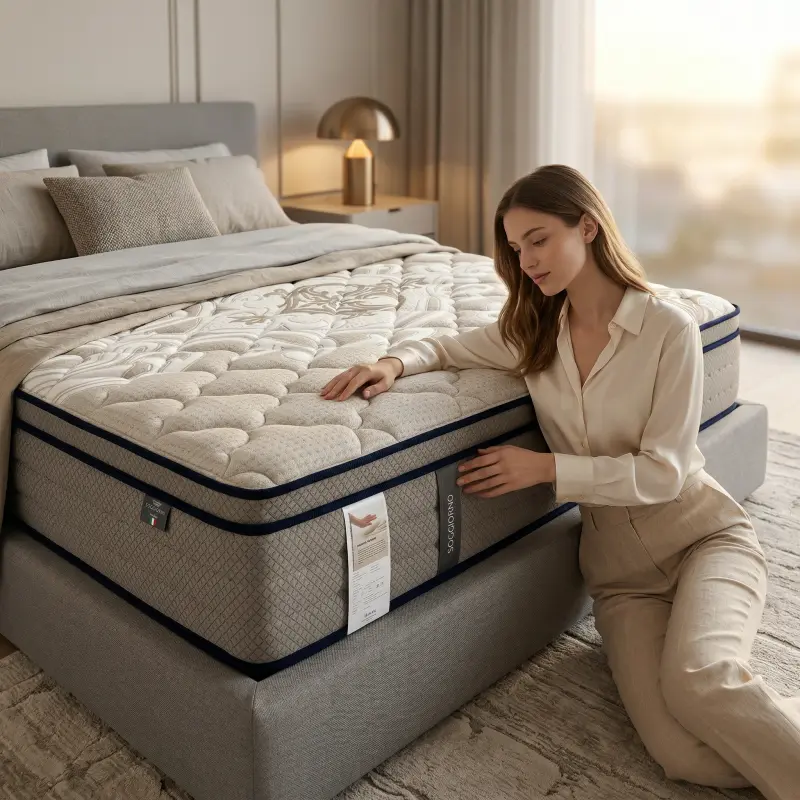
For private label buyers, labels should match both brand design and legal requirements. A reliable mattress factory can help confirm label format, language, placement, and durability, especially when products are shipped to multiple markets.

5. Compliance, Safety, and Certification Considerations
Compliance is one of the most important responsibilities in private label mattress manufacturing. The buyer remains responsible for ensuring that the product meets destination market requirements, even when production is handled by an external factory.
Key compliance areas include:
Fire safety standards for the target country
Material safety requirements for foam and textiles
Chemical restriction rules applicable to sleep products
Labeling and disclosure obligations
Packaging and waste regulations
Documentation for customs clearance
Buyers should request relevant certificates or test reports before mass production. For hotel chains, retailers, and large distributors, third-party inspection or certification may also be required. A professional mattress manufacturer should be able to provide supporting documents and explain which standards apply to each export destination.
6. Packaging, Branding, and Unboxing Experience
Packaging is part of the private label mattress brand experience. For e-commerce brands, compact roll-pack cartons can improve delivery efficiency and reduce shipping cost. For hotels and retailers, flat-pack or reinforced packaging may provide better protection and a more premium presentation.
Branding opportunities in packaging include:
Custom printed cartons with logo and product information
Branded inner bags or protective wraps
Instruction cards for unpacking and expansion
Warranty cards and customer support details
Handling symbols for export shipping
Model-specific labels to avoid warehouse confusion
Packaging should balance brand image, protection, and logistics efficiency. Over-designed packaging may increase cost, while under-protected packaging may cause damage during sea freight or last-mile delivery.
7. Managing Quality Control and Long-Term Supply Stability
Private label success depends on consistent quality across multiple production batches. B2B buyers should establish clear quality control procedures with the mattress factory before placing bulk orders.
Recommended steps include:
Confirming an approved reference sample
Documenting material specifications
Reviewing labels and packaging before production
Conducting in-process checks during manufacturing
Performing final random inspection before shipment
Keeping production records for traceability
Planning warranty and defect handling procedures
For long-term cooperation, buyers should also discuss capacity planning, lead times, raw material stability, and reorder processes. A stable mattress supply chain helps protect brand reputation and reduces operational risk as order volume grows.
8. Conclusion: Build a Private Label Mattress Brand on Clear Standards
Private label mattress manufacturing gives B2B buyers more control over branding, product design, and market positioning. However, successful private label programs require more than a logo. They depend on clear specifications, compliant labeling, reliable safety documentation, professional packaging, and consistent quality control.
For distributors, hotels, retailers, and online brands, the best approach is to work with an experienced mattress factory that understands export requirements and private label development. When branding, labeling, and compliance are managed from the beginning, buyers can launch a mattress line that is competitive, scalable, and aligned with long-term business goals.
 How to Evaluate Mattress Quality Before Placing a Bulk Order
 You May Also Like











 Tel
 Email
 Address
NO.9 industry rd, Gegao, Longjiang, Shunde, Foshan,China