

 Inquire (
 HOME
HOMESmart Mattress Technology for B2B: What Buyers Need to Know
 Aug 24,2026

 Cloud Point
1. Why Smart Mattress Technology Is Becoming a B2B Priority
The mattress industry is entering a new phase where comfort, durability, and intelligent functionality are no longer separate categories. For B2B buyers such as hotel groups, healthcare operators, senior care providers, wellness brands, retailers, and project developers, a smart mattress is no longer just a consumer trend. It is becoming a practical product strategy for improving guest experience, supporting health monitoring, reducing operational complaints, and creating stronger product differentiation.
A smart mattress typically combines traditional mattress construction with embedded technology such as sleep sensing, pressure monitoring, temperature control, adjustable firmness, smart home connectivity, and sleep data analysis. For B2B buyers, the key question is not whether the technology sounds advanced, but whether it delivers measurable value in real commercial environments. A well-designed smart mattress should improve user experience without compromising comfort, reliability, safety, or long-term performance.

2. Core Smart Mattress Technologies B2B Buyers Should Understand
Before placing a bulk order or developing a private-label product, B2B buyers should understand the main technology categories behind a smart mattress. Different applications require different feature combinations, and choosing the right configuration is essential for cost control and market positioning.
Key technology areas include:
Sleep tracking technology: Monitors movement, breathing patterns, heart rate, and sleep stages without requiring users to wear additional devices.
Pressure mapping technology: Uses sensors to detect body pressure distribution and support posture optimization.
Temperature control technology: Helps regulate surface temperature through cooling, heating, or airflow management systems.
Adjustable firmness technology: Allows the mattress to adapt firmness levels based on user preference, body type, or sleep position.
Smart home integration: Enables the mattress to connect with apps, voice assistants, lighting, air conditioning, curtains, and other smart devices.
For B2B buyers, these technologies should not be treated as isolated features. The strongest smart mattress products combine several functions into a stable, user-friendly system that supports the needs of hotels, hospitals, elderly care facilities, wellness centers, or retail customers.
3. Smart Mattress Applications in Hotels, Healthcare, and Senior Care
One of the biggest advantages of smart mattress technology is its ability to serve different B2B markets with different priorities. In hotels, the focus is often on guest comfort, premium positioning, personalized sleep experience, and stronger brand storytelling. A smart mattress can help a hotel create a more modern room experience, especially in boutique hotels, business hotels, wellness resorts, and upgraded hospitality projects.
In healthcare and senior care environments, the focus shifts toward safety, monitoring, and long-term usability. A smart mattress can support elderly users, rehabilitation patients, and long-term care residents by offering sleep monitoring, fall-risk awareness, pressure distribution analysis, and remote data access. In hospitals, clinics, and senior living facilities, the mattress must also meet stricter hygiene, durability, and maintenance requirements.
For wellness brands and retail buyers, a smart mattress can become a high-value product that supports premium pricing. Consumers are increasingly interested in sleep health, recovery, stress reduction, and personalized comfort. A smart mattress allows brands to move beyond traditional comfort claims and offer a more technology-driven sleep solution.
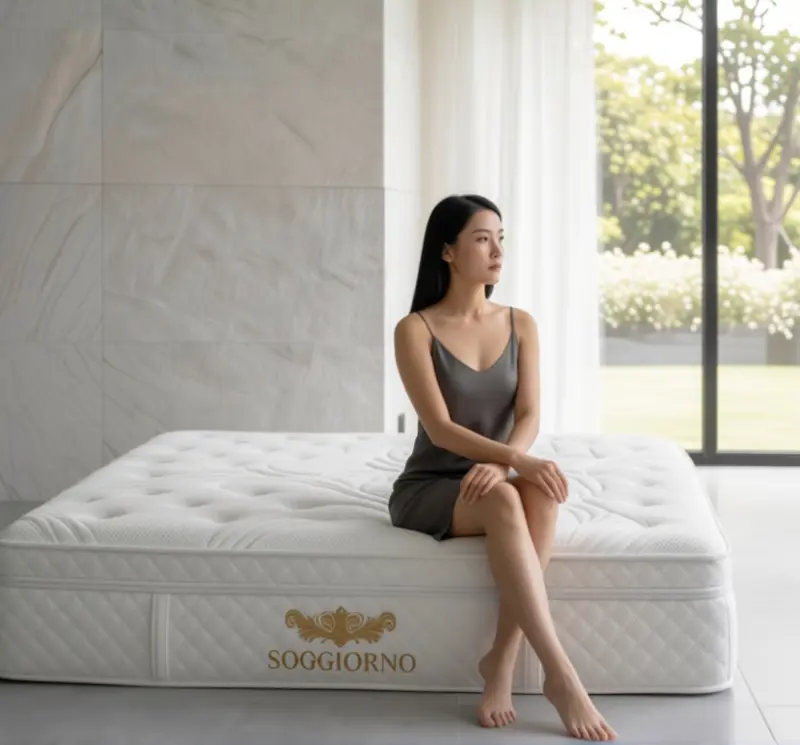
4. Comfort and Sleep Quality: The Foundation of Every Smart Mattress
Technology should enhance a mattress, not replace its core function. For B2B buyers, comfort remains the most important factor. If a smart mattress feels uncomfortable, unstable, or overly complex, the technology will not create long-term customer satisfaction.
A strong smart mattress should still deliver the fundamentals of a high-quality mattress:
Balanced support for the spine and body pressure points
Breathable cover fabric and airflow-friendly construction
Durable foam, spring, hybrid, or latex core
Effective motion isolation for shared sleeping environments
Reinforced edge support for safety and usability
Suitable firmness options for different user groups
For hotels, comfort directly affects guest reviews and repeat bookings. For healthcare and senior care buyers, comfort affects patient rest, recovery, and daily well-being. For retail brands, comfort determines whether customers recommend the product after purchase. Therefore, B2B buyers should evaluate a smart mattress not only by its electronic features, but also by its physical construction and long-term sleep performance.
5. Durability, Maintenance, and Commercial Reliability
Commercial environments place higher demands on a hotel mattress than residential use. Hotels rotate guests frequently, healthcare facilities require strict hygiene standards, and senior care environments need products that remain safe and stable over time. This means a smart mattress for B2B use must be engineered for durability, not just innovation.
Buyers should pay attention to:
Water-resistant or protective layers: Useful for healthcare, senior care, and hospitality environments.
Easy-to-clean surfaces: Important for housekeeping efficiency and infection control.
Stable electronic components: Sensors, wiring, and control modules should be protected from moisture, pressure, and daily wear.
Low-maintenance design: Reduces operational burden for hotel and facility managers.
Long-term structural support: Prevents sagging, edge collapse, and premature replacement.
A smart mattress with poor durability can increase maintenance costs, create guest complaints, and damage brand trust. For B2B buyers, reliability is just as important as technology. The best smart mattress supplier should provide clear information about material quality, electronic component protection, testing standards, and expected product lifespan.
6. Data Privacy, Compliance, and Safety for B2B Buyers
Because a smart mattress collects user data, B2B buyers must consider data privacy, product safety, and market compliance. This is especially important for hotels, hospitals, senior care facilities, and international buyers who must meet local regulations.
Key compliance and safety areas include:
Data privacy: Sleep data, health-related data, and user behavior data should be handled responsibly.
Electrical safety: The mattress should meet relevant electrical and electronic product standards.
Fire safety: Materials and construction should comply with destination market requirements.
Electromagnetic compatibility: Electronic components should not interfere with other devices.
Certification documentation: Buyers should request clear test reports, product specifications, and compliance certificates.
For B2B projects, compliance is not optional. A hotel chain, healthcare provider, or retail brand cannot afford to deploy a smart mattress without understanding its safety and data-handling requirements. A professional mattress factory should help buyers identify the right compliance path based on the target market, product configuration, and end-user environment.
7. How B2B Buyers Should Evaluate a Smart Mattress Supplier
Choosing the right smart mattress supplier is one of the most important decisions for B2B buyers. The right partner should combine mattress manufacturing experience with electronic product development capability. A supplier that only understands foam or springs may struggle with sensor integration, while a supplier that only understands electronics may lack deep mattress comfort expertise.
B2B buyers should evaluate suppliers based on:
Product customization: Ability to adjust size, firmness, thickness, cover fabric, technology modules, and branding.
OEM/ODM capability: Support for private-label development, bulk production, and tailored product design.
Quality control: Inspection of both mattress comfort layers and electronic components.
Testing and certification: Availability of relevant safety, performance, and compliance documentation.
Production capacity: Ability to deliver consistent quality across large-volume orders.
After-sales support: Spare parts, technical guidance, warranty terms, and maintenance support.
For buyers developing a branded product, OEM/ODM services are especially valuable. A flexible mattress factory can help create a smart mattress that matches the buyer’s target market, price range, and brand positioning. This allows retailers, hotel suppliers, healthcare distributors, and wellness brands to launch differentiated products without building their own production infrastructure.
8. Conclusion: Smart Mattress Technology as a Long-Term B2B Opportunity
Smart mattress technology is more than a product upgrade. It is a strategic opportunity for B2B buyers to improve user experience, strengthen brand positioning, and build higher-value product lines. For hotels, it supports premium guest comfort. For healthcare and senior care, it supports monitoring, safety, and well-being. For retailers and private-label brands, it creates a stronger competitive advantage in a crowded bedding market.
However, B2B buyers should approach smart mattress sourcing with a practical mindset. The best product is not simply the one with the most features, but the one that balances comfort, durability, safety, compliance, data privacy, and commercial reliability. By partnering with a professional mattress factory that understands both traditional mattress manufacturing and intelligent sleep technology, B2B buyers can develop a smart mattress that delivers real value to end users and long-term business growth.
 Post-Pandemic Hotel Mattress Demand: Comfort & Hygiene First


 You May Also Like


 Tel
Tel
 Email
Email
 Address
NO.9 industry rd, Gegao, Longjiang, Shunde, Foshan,China